Kumihimo: Learn the Ancient Japanese Art of Braiding at Kumi no Sato
Explore Your Interests
2021.03.15
Category :
Area :
Kumihimo is a traditional Japanese handicraft made by braiding dyed cotton or silk threads. These colorful braids were historically used to tie the obi (wide sash worn round the waist of a kimono) and as decorations on samurai armor. The majority of kumihimo are now produced in the Iga region of Mie Prefecture, where they are known as “Iga kumihimo.” In 2016, kumihimo regained its popularity after appearing in the famous Japanese film, “Your Name.” At Kumi no Sato in Iga, visitors can make their own kumihimo bracelet or keychain to take home as a special keepsake.
Written by Nathan Raymond
The nearest station to Kumi no Sato is Uenoshi Station, which is very close to the grounds of Iga Ueno Castle. From the station, it was only about a five-minute walk, and the building was easy to spot thanks to the large red banner outside.
As soon as you enter the building, you can see the space where the kumihimo are made. The floor is covered with traditional tatami mats, and the room is filled with wooden marudai stands, which are the round frames traditionally used to braid silk threads into kumihimo.
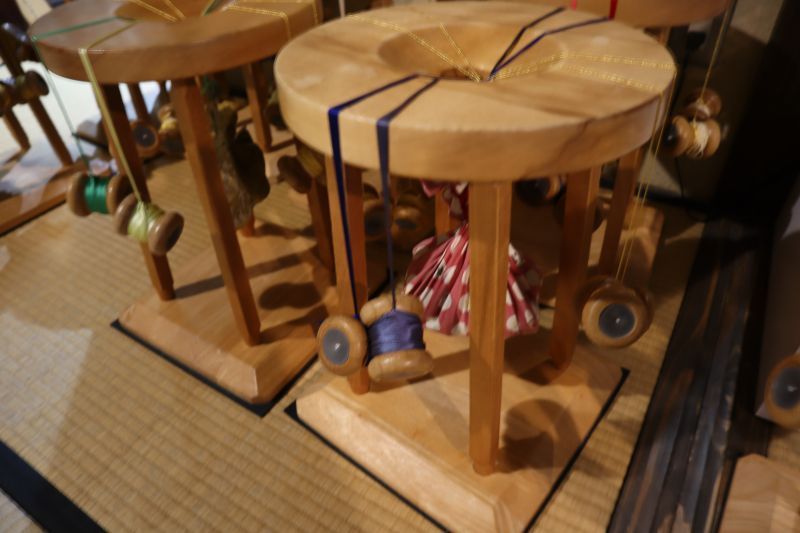
We used the wooden marudai stands while braiding the thread.
The process of making kumihimo involves braiding colorfully dyed thread into accessories using a marudai stand. These braids were commonly used to secure the obi in place. The history of Iga kumihimo has been traced back to over 1,300 years ago, and Iga is considered to be the center of kumihimo production.
The earliest known use of these braids was on earthenware pottery from the Jomon period (about 1000 BCE), which was decorated with a two-thread braid and a rotary stamping pattern of three or more braided threads. In the Nara Period (710-794), new techniques for making kumihimo were shared around Japan alongside the spread of Buddhism, often used to embellish sacred scriptures. Some ancient braids were also used as decoration on a musical instrument called “kugo,” preserved at the Shosoin Temple in Nara.
During the Heian period (794-1185), the colors and designs of kumihimo became more refined and delicate. They were used for bundle belts and served as important adornments on the clothing of court nobles. In the Kamakura period (1185-1333), the braids became a common accessory for samurai armor, and more subdued colors were used. Later, in the Muromachi period (1336-1573), the decorative braids were often used in tea ceremonies and flower arrangements.
In the early Edo period (1603-1868), demand for kumihimo increased rapidly as they were used to decorate sword handles. As a result, craftsmen specializing in armor accessories moved to the capital city of Edo (now Tokyo), under the protection of the shogunate and competed to achieve the best braiding techniques.
During this time, many different styles emerged, and the braids came to be used on haori (jacket worn over a kimono), inro (small case to hold things while wearing kimono), cigarette cases, and more. When the Meiji period arrived, the use of swords was abolished, and the use of the kumihimo declined considerably.
In the late Meiji period, people wanted to revive the use of kumihimo as part of Japanese culture. Around this time, the kimono obi took on its current shape, and kumihimo were used to secure them in place, making the colorful braids popular among the general public.
When it was time for my kumihimo-making experience, I felt a bit nervous because the process looked challenging. At first, it was tricky, but after my teacher showed me the proper technique, I was able to braid smoothly.
The key is to understand how to use the marudai stand properly. The brilliance of its design is truly impressive. The weight of each spool creates enough tension in the threads, making it possible to braid tightly.
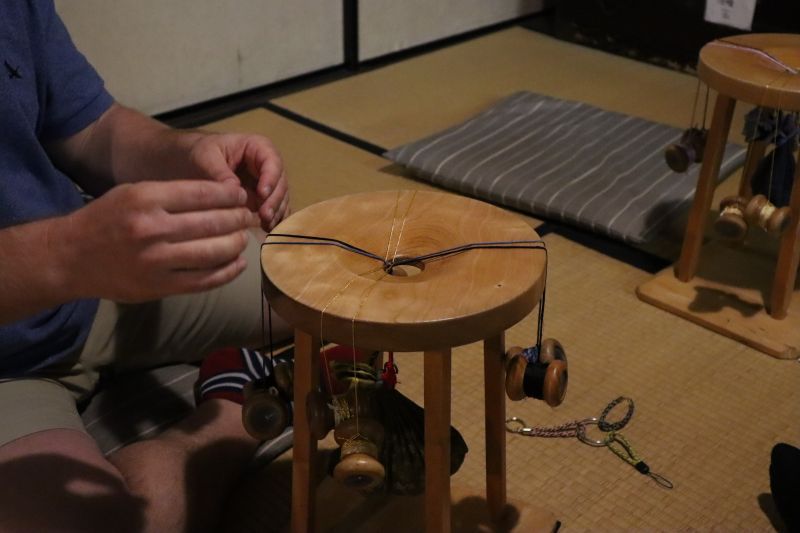
The four threads are kept in place by the weight of each spool.
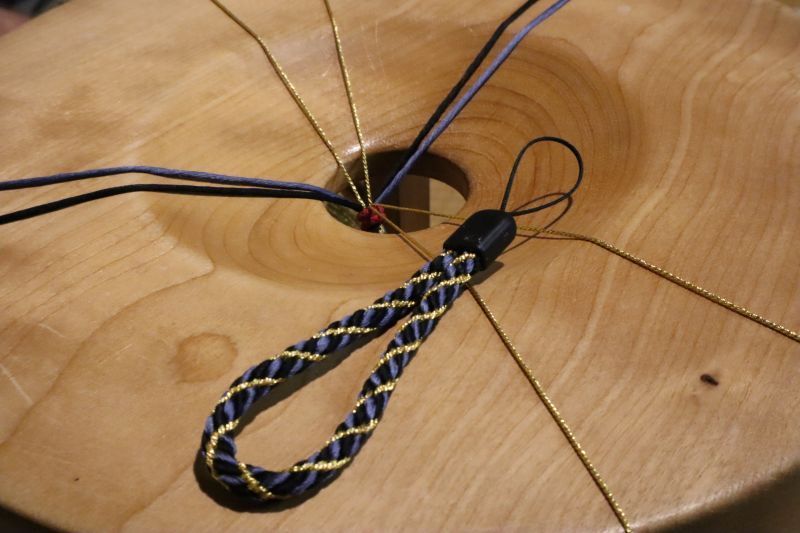
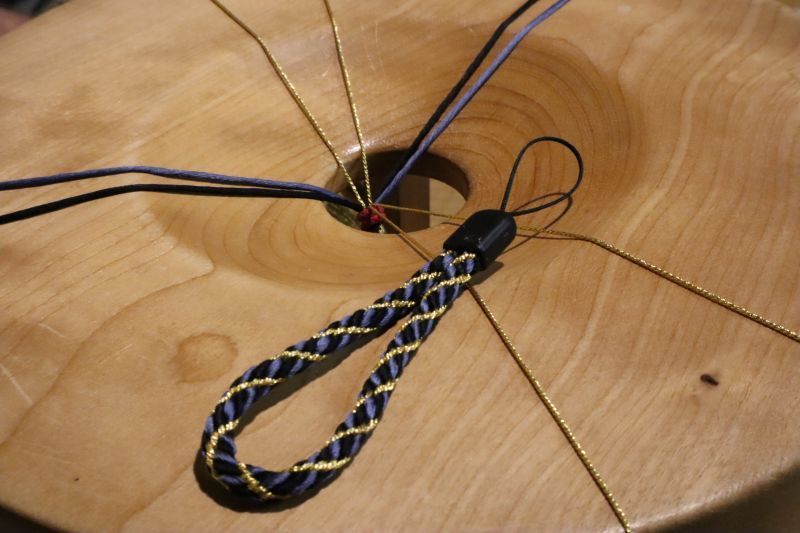
Because we were so close to Iga Ueno Castle, I decided to start with the royal color purple. For the second color, I chose royal blue to keep the regal theme going. The third and final color was a shiny gold. I felt this combination of colors would create a stunning bracelet or phone strap fit for an emperor.
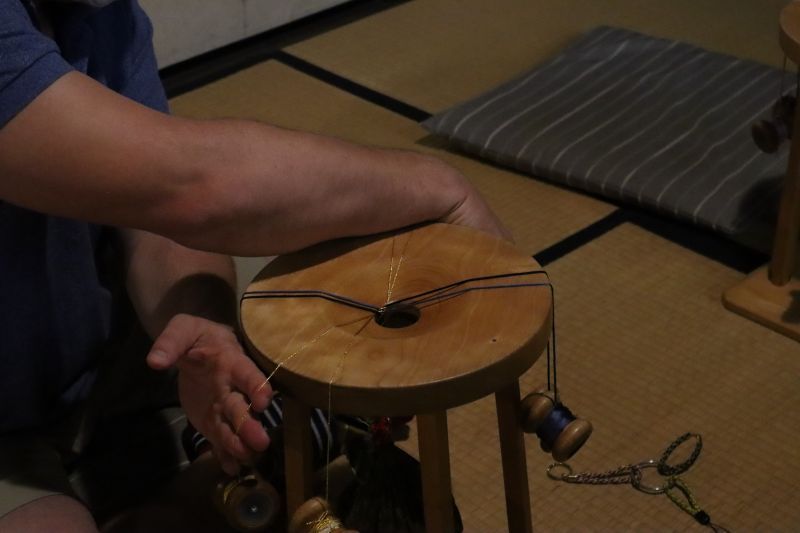
I had to learn the correct technique to braid the threads successfully.
Even though I found the technique difficult to master in the beginning, my teacher’s patience and expertise helped me learn quickly. I was soon braiding smoothly and my kumihimo began to take shape right before my eyes. It felt wonderful to learn an ancient art and make something with my own hands.
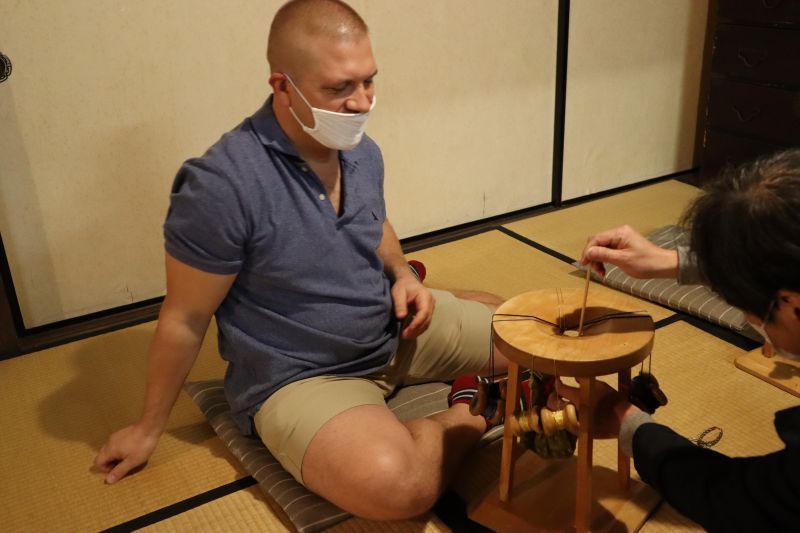
It was important to check the length of my braid to know when I was finished.
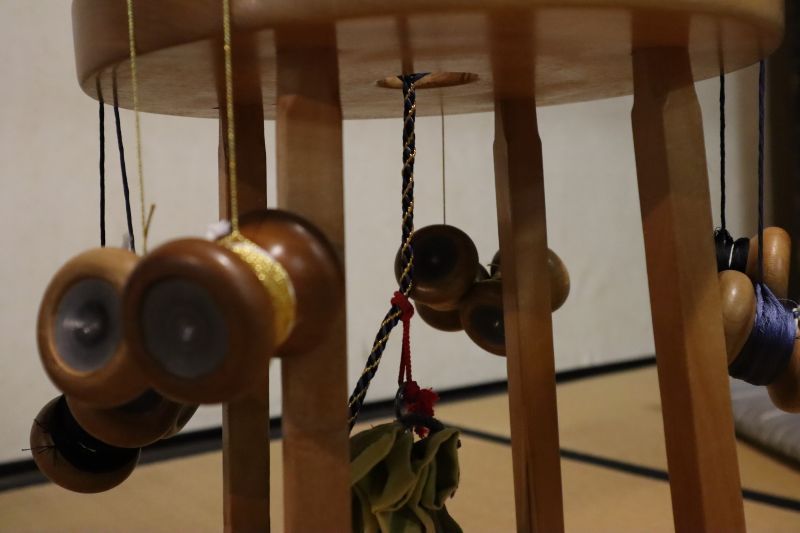
It is essential to keep the tension tight to make a neat braid.
Learning the traditional process allowed me to truly appreciate the skills of the artisans of the past who created beautiful kumihimo. I was amazed by the design of the marudai stand and how the natural weight of the spools pulling the threads tight made it possible to braid them together. It was a pleasure to have a hands-on experience that allowed me to create something in the same way it had been done for hundreds of years.
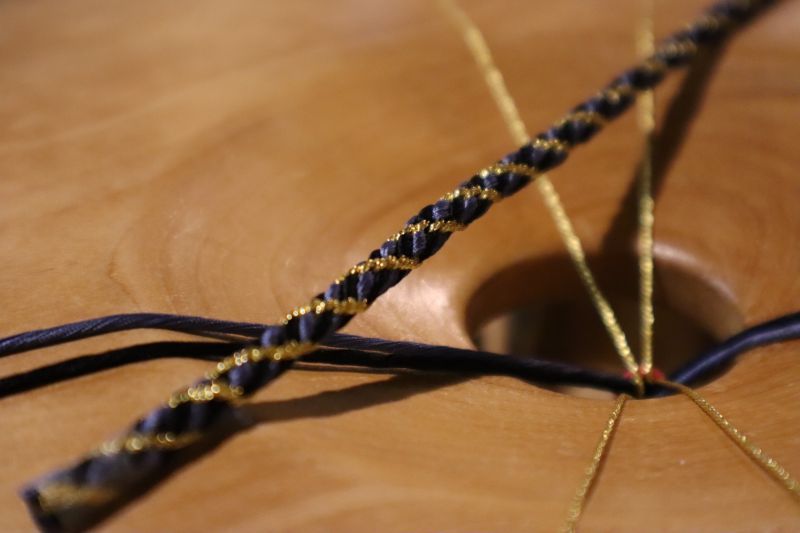
I really loved how the gold thread accented the deep blue and purple.
When I finished making my kumihimo, I could fully appreciate how much work goes into making this traditional craft. My braid was beautiful, and I felt a strong sense of pride in my workmanship.
I was also glad to know that this unique traditional craft still has a place in modern Japan. Learning about the history of kumihimo, once used by samurai and nobles to adorn their armor and kimonos, made the experience much more meaningful. It felt special to carry on the tradition in a small way by making a personal accessory.

I was proud of my unique braided accessory.
The process of making the braid took about 20 minutes, and my final keepsake was a phone accessory. My teacher also showed me the proper technique for joining the ends of my kumihimo to seal it and then provided me with a bag so I could gift it to someone.
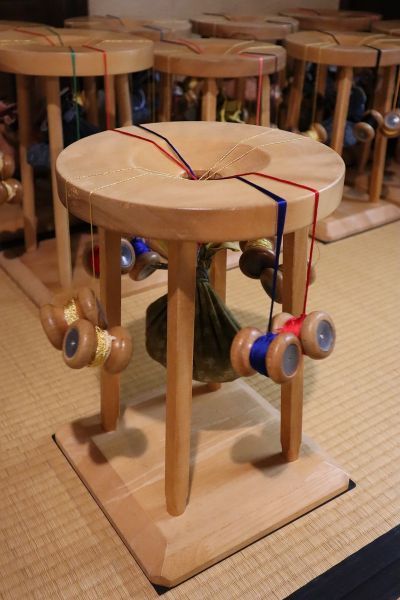
The Marudai stand, threads, spools and bag of stones for weight in the middle.
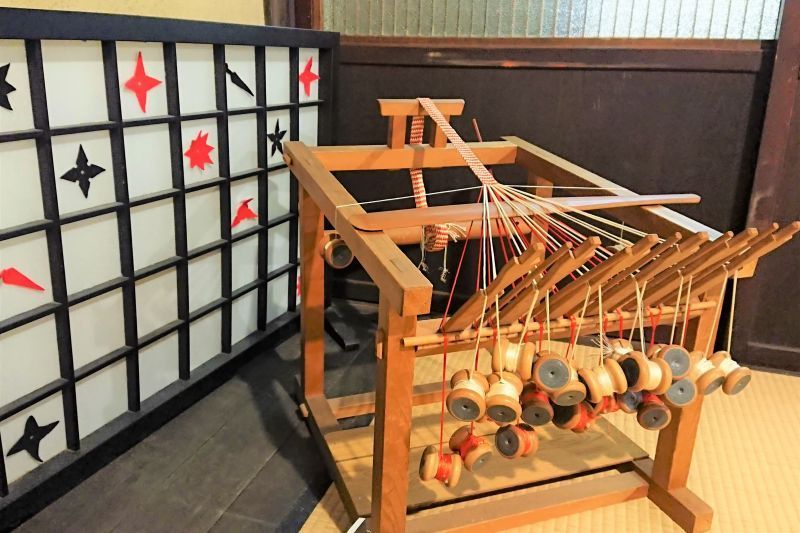
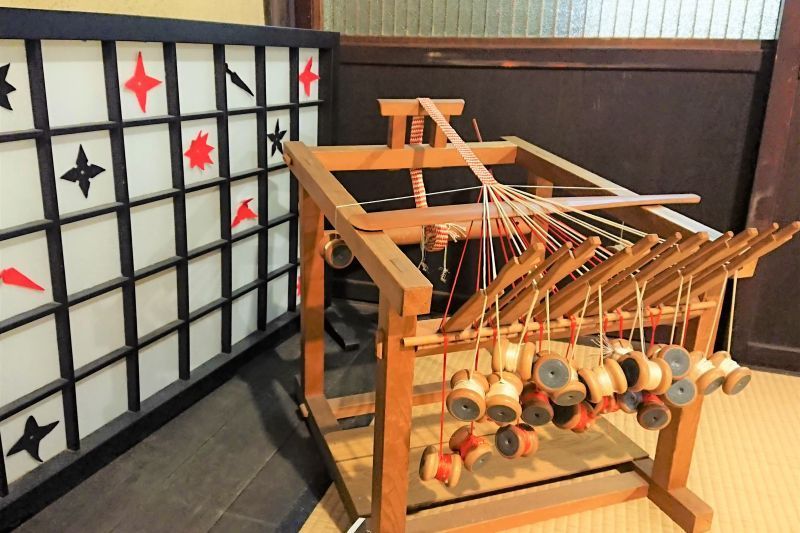
This style of loom is used to make thin and flat kumihimo.
Kumi no Sato also has a nice gift shop with a wide selection of related products for visitors to purchase. As I explored the shop, I was impressed by the creativity and modern applications of this traditional craft.
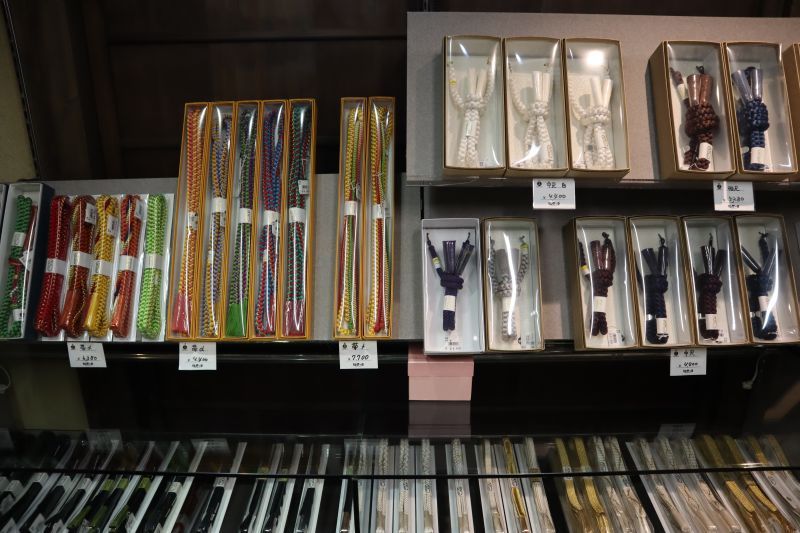
The shop at Kumi no Sato displayed a wide range of kumihimo products.
After learning how to make the kumihimo with my own hands, it was very interesting to see all of the styles and products on display. Some of the more interesting items available for purchase were the neckties made from kumihimo. They were beautifully crafted and unlike anything I had ever seen before.
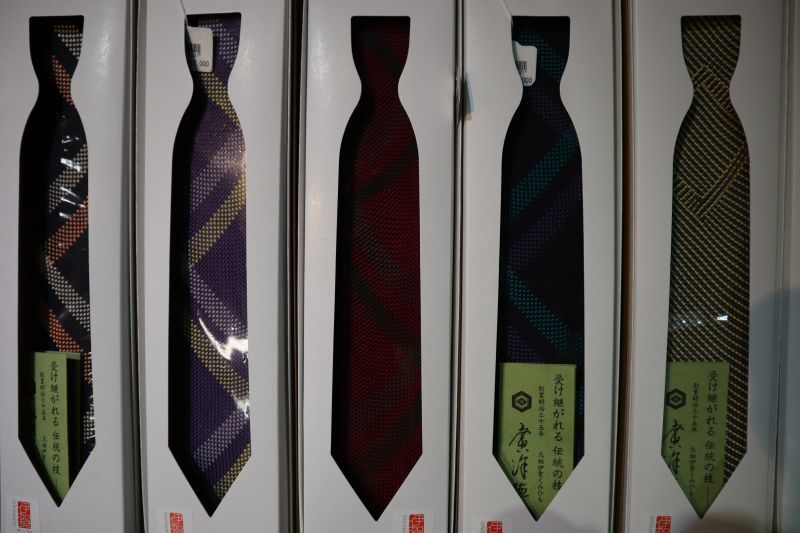
The neckties made from kumihimo were one of the more unique products.
Each color combination and the different thicknesses and styles of the kumihimo result in products that each have their own unique character. There were many items that caught my eye and would make great souvenirs for friends and family.
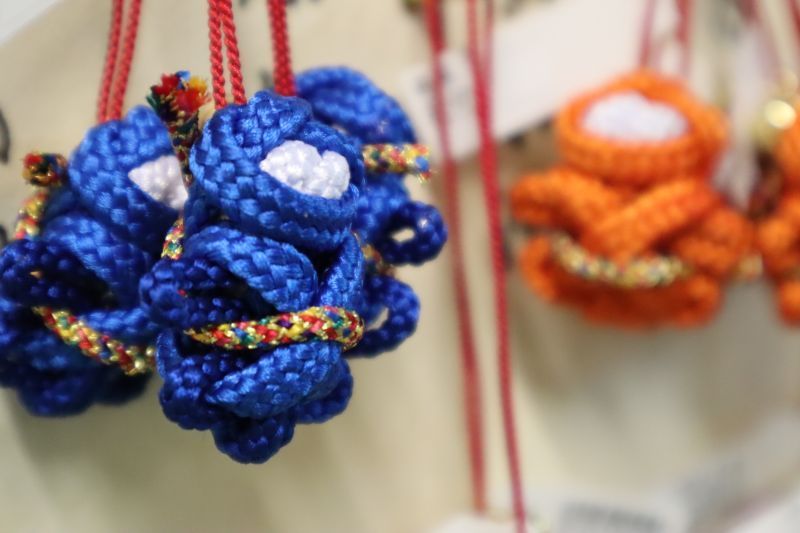
Because we were in Iga, there were some ninja-themed kumihimo.
Everywhere you go in Iga, you will find traces of ninjas. Kumi no Sato was no exception and there were some cute ninja-inspired designs made with brightly colored kumihimo. There were so many creative ways to use the braids to make different accessories, and I could appreciate the artistry of the local craftsmen.
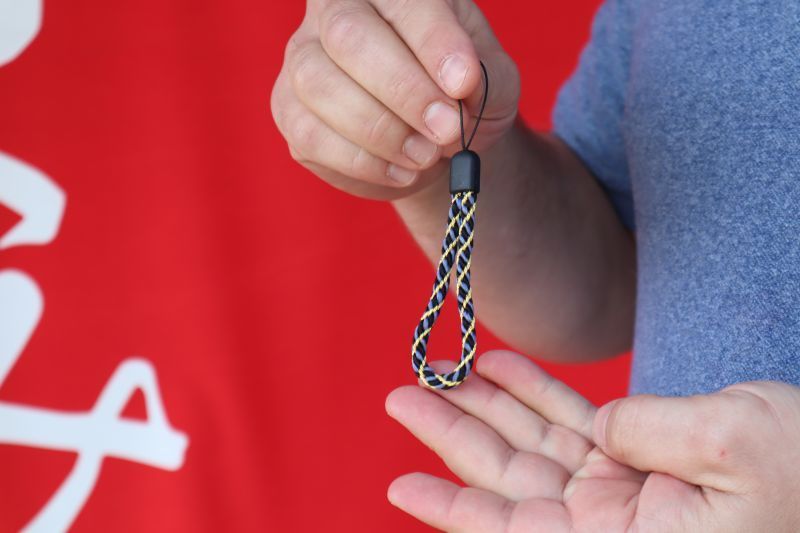
I was proud of my one-of-a-kind kumihimo.
Thanks to my friendly and talented teacher, I was able to leave Kumi no Sato with a wonderful keepsake. It had been an interesting and fun experience to learn the ancient art of making kumihimo in Iga.
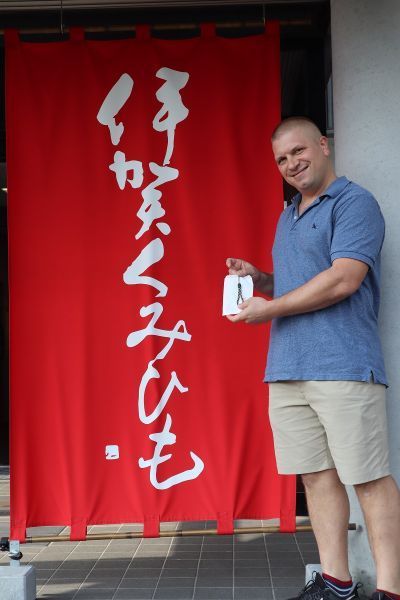
The bright red banner lets you know where to make kumihimo.
A visit to Kumi no Sato gives tourists the opportunity to learn about an ancient craft and make a personal souvenir to take home. The teachers in the workshop are helping to ensure that the traditional techniques are carried on and shared with people from all over the world. A trip to Iga will instantly be better if you take the time to experience the art of kumihimo.
Related Articles

The Lustrous Center of the Pearl Universe: Mikimoto Pearl Island

Akame 48 Waterfalls:A Group of Beautiful Waterfalls Preserved by the Locals

A Day Spent with Ama Divers: Ama Hut SATOUMIAN
Tokaido’s Old Golden Route: Wandering Through Sekijuku and Crafting Candles at Akari